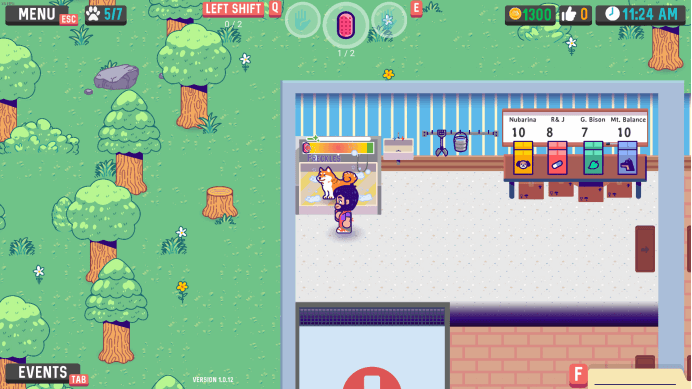
By the stove on a rainy night, I opened the thick sheepskin book for the first time. The dry corner of the ink is recorded: “John, the blacksmith, married Ella, the shepherdess, and gave birth to three children, one of whom died early.” And the blank space is waiting for me to write a new line. In this medieval town, I played not a lord or a hero, but a matchmaker — a man who weaves a family tree with marriage and thus quietly changed the fate of the whole village.
The beginning is very simple. The blacksmith’s son was silent, and the tailor’s daughter was shy. They didn’t even dare to look at each other when they met in the market. My job is not to pull the line directly, but to create opportunities: arrange them to sort out the books in the church together, assign the same group of tasks on the Harvest Festival, and occasionally “accidentally” convey a word of praise from the other party. The game decomposes personality into specific characteristics: “hardworking”, “optimistic”, “pious” and “rebellious”. Pairing is not the addition of attributes, but the observation of chemical reactions — when the son of the silent blacksmith saw the girl clumsily repairing the spindle, he took the initiative to guide for the first time. At that moment, the system popped up a prompt: “Tacit understanding sprouts”.
But marriage is just the beginning. A few years later, the couple’s daughter grew up. She inherited her father’s “skillful hand” and mother’s “optimism”, but added the “restlessness” of the new era. She didn’t want to stay in the town, and at this time, the expedition team happened to pass by. I want to decide whether to facilitate her marriage with the explorer or to marry her off to a local farmer to maintain stability. There is no right or wrong choice, but each branch line leads to a different future: if she travels far, she may send back rare seeds to change agriculture in 20 years; if she stays, she may be able to resolve a neighborhood dispute. The timeline of the game is forked like a real tree, and each marriage is a node, extending the story of children and grandchildren.
What fascinates me most is those unexpected entanglements. I have carefully promoted a “perfect marriage”, and the personalities of the two parties are completely compatible. Ten years later, the husband began to drink alcohol and gossiped with the fisherman couple because of the unsatisfied “ambition” characteristics. The system did not warn, but faintly wrote in the corner of the family history page: “Robert often drinks in the pub at night.” I need to let their daughters talk to their father, or ask the witness of that year to mediate. Interpersonal relationships have become an ecosystem that can be intervened. Every decision is like throwing a stone into a lake, and the ripples spread to generations.
As the pages of the booklet thickened, the appearance of the village changed because of my choice. If business travelers are promoted to marry locals many times, the market will gradually prosper but faith will be weak; if the scholar’s family insists on intermarriage, the culture will be prosperous but the population will decline. The inscriptions on the tombstone, the gossip in the tavern, and even the architectural style of the house are silently telling a small decision I made one afternoon decades ago.
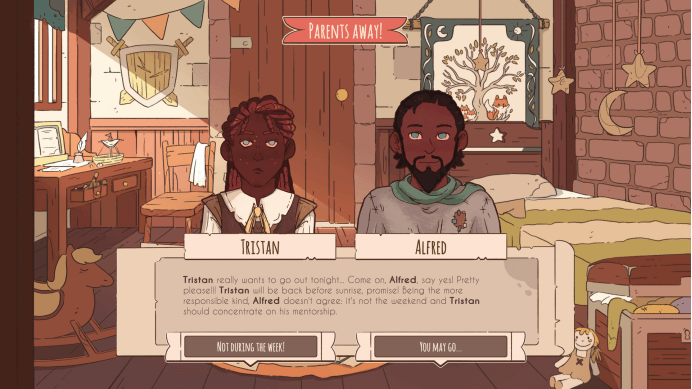
In the final chapter of the game, I have gray hair. The last task is to mediate for your grandchildren. When I looked through the family tree, I found that almost every family in the village was inextricably linked to the marriage I promoted. I chose the granddaughter of the shy couple and the descendant of a boy who had avoided a family breakup because of my mediation. On the wedding day, the rain stopped, and the sun shone on the old parchment book, and the ink marks were staggered.
After quitting the game, I looked at the lights of the city outside the window and suddenly felt that behind every lighted window, there might be an unwritten sheepskin book. _Lakeburg Legacies_ did not give me the hegemony of the king. It gave me a lens to observe history: the so-called torrent of the times may be the seemingly insignificant line that countless ordinary people like us carefully wrote on an ordinary day: “They fell in love and decided to spend this life together.” And the most gentle power of history is hidden in these choices — it makes every mortal become an anonymous author of future stories.